
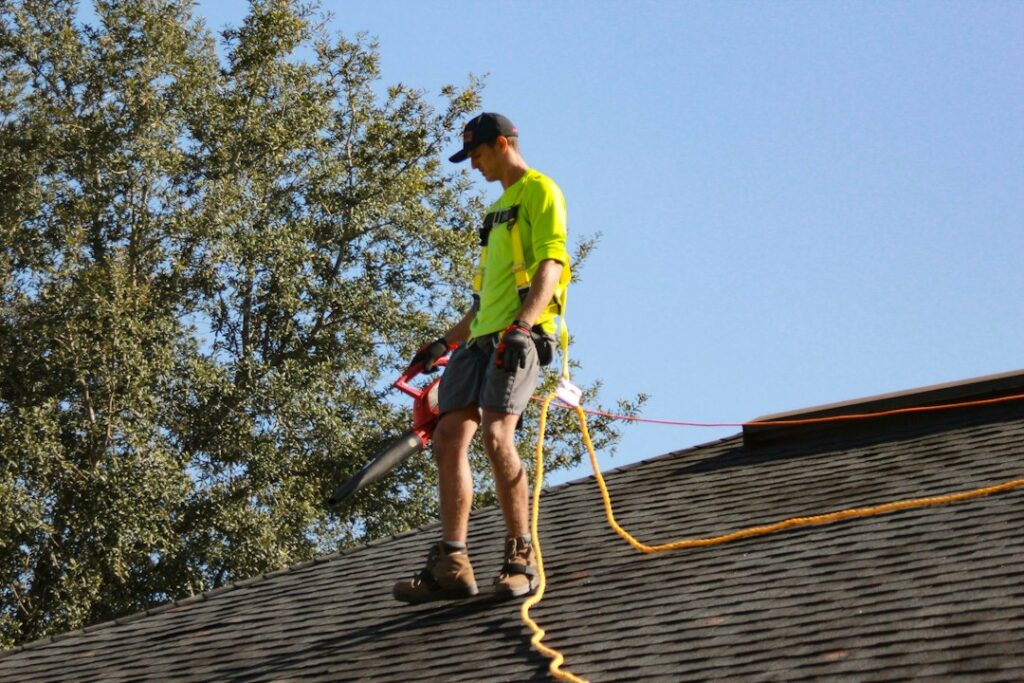
Walking on a roof is not a routine household task. Even a one-story roof can cause severe injury if a person slips, steps through a weak area, loses balance near an edge, or falls from a ladder. The safest approach is to avoid climbing whenever the task can be completed from the ground, from an attic, or with a long-handled tool.
If roof access is truly necessary, the roof, weather, ladder, footwear, and fall protection should all be evaluated before anyone climbs.
Is it safe for a homeowner to walk on a roof?
It may be possible to walk carefully on a dry, low-slope roof in good condition, but no roof should be treated as a normal walking surface. Roofs are designed to shed water and support specific loads, not necessarily to provide comfortable footing.
A homeowner should not walk on a roof if:
- The surface is wet, icy, frosted, snow-covered, or covered with algae
- Wind is strong enough to affect balance
- The roof is steep or difficult to judge from the ground
- Shingles are loose, brittle, curling, or missing
- There are soft spots, sagging areas, exposed decking, or visible water damage
- The roof edge, skylights, vents, or flashing appear damaged
- The person is carrying bulky materials or is unfamiliar with ladder and fall protection practices
In Brockport, changing weather can create especially deceptive conditions. A roof may look dry while remaining slick from overnight frost, melting snow, or damp shade. Spring and autumn mornings can also leave roof surfaces wet long after nearby pavement has dried.
How should the roof be checked before climbing?
Inspect the roof from the ground first. Look for sagging lines, damaged shingles, missing sections, dark areas that may indicate moisture, and tree limbs that could interfere with access. Check whether the roof has multiple levels, valleys, dormers, skylights, or other areas that may be difficult to cross safely.
From inside the attic, look for:
- Stained or softened roof decking
- Daylight showing through the roof
- Sagging sheathing between rafters
- Damp insulation
- Mold-like growth or a musty odor
- Signs that water has been entering around vents or penetrations
Never assume a roof can support body weight simply because it appears intact. A concealed area of rot may fail under a single step. Skylights are another major hazard because some older units are not designed to support a person, even when they look solid.
What weather conditions make roof walking unsafe?
Dry, calm weather is the minimum starting point. Rain, snow, freezing rain, frost, and strong wind all increase the chance of a fall.
Do not climb during or soon after:
- Rain or drizzle
- Freezing temperatures when moisture may have turned to ice
- Snowfall or blowing snow
- Rapid thawing
- High winds
- Thunderstorms
- Extreme heat that makes roofing materials soft
Snow and ice deserve extra caution in the local climate. Snow can hide roof edges, weak decking, loose shingles, and skylights. Ice may form in shaded areas or along eaves even when the center of the roof appears clear. Removing snow from a roof is not a reason to climb onto it with a shovel. A roof rake used from the ground is generally less hazardous, although falling snow and ice can still injure people or damage property below.
How should a ladder be positioned?
Many roof falls happen before a person even reaches the roof. Use a ladder that is rated for the user and equipment, and place it on firm, level ground. Keep the base clear of snow, mud, ice, loose gravel, and objects that could shift.
The ladder should extend above the roof edge enough to provide a stable handhold during the transition. It must be secured so it cannot slide sideways or away from the wall. Do not rest it against gutters, weak trim, or unstable roof materials.
While climbing:
- Face the ladder
- Keep both hands available whenever possible
- Maintain three points of contact
- Climb slowly
- Avoid carrying tools in your hands
- Use a tool belt or raise equipment after reaching a secure position
- Keep the ladder away from overhead electrical lines

Never step from a ladder onto a roof while holding a heavy object. A second person should stabilize the ladder and remain on the ground, but another person does not replace proper fall protection.
What is the safest way to move across a roof?
Move slowly and keep your body low when appropriate. Face the direction of travel rather than turning sideways across a slope. Take short steps and place each foot deliberately. Avoid sudden turns, jumping over ridges, or walking backward.
On shingle roofs, step on the lower portions of the shingles where they overlap and where the roof structure is usually more supportive. Avoid stepping on exposed edges, loose tabs, brittle surfaces, or areas with granules worn away. Do not drag ladders, tools, or hoses across shingles because they can cause damage.
Keep away from roof edges, valleys, gable ends, chimneys, and skylights unless the area has been specifically protected. Valleys may collect water and debris, while roof edges can be weakened by concealed rot or ice damage. Do not walk on gutters; they are not designed to support a person.
What fall protection is needed?
A steep roof or any roof with a meaningful fall hazard should not be walked without a properly planned fall-protection system. Depending on the work, this may include a properly fitted full-body harness, a suitable anchor, a lifeline, roof brackets, guardrails, or other approved equipment.
A harness is not automatically safe just because it is being worn. The anchor must be designed and installed for fall protection, and the system must limit the distance of a fall without creating a dangerous swing. Ordinary plumbing vents, chimneys, ridge vents, or improvised ropes should never be used as anchor points.
Construction workers are generally subject to specific fall-protection requirements when working above lower levels. Homeowners should use those requirements as a reminder that roof access is a serious fall hazard, not as a substitute for training or a site-specific safety plan.
Which tasks should be done from the ground?
Many common roof tasks do not require walking on the roof. Ground-based options may include:
- Inspecting shingles with binoculars
- Clearing leaves from lower roof edges with an appropriate tool
- Trimming nearby branches from a safe location
- Checking gutters from a properly positioned ladder
- Using a roof rake for limited snow removal
- Photographing suspected damage from the ground
- Looking for attic stains or daylight from inside the home
If a roof must be crossed to inspect damage, repair a leak, or remove an obstruction, conditions that are steep, wet, icy, fragile, or structurally questionable justify staying off the roof. Serious injury can occur even when the intended task would take only a few minutes.
What should someone do after a fall or near miss?
After a fall, do not assume a person is uninjured because they can stand or speak. Head, neck, back, and internal injuries may not be obvious. Keep the person still when possible and seek emergency medical assistance for significant falls, pain, confusion, bleeding, loss of consciousness, or difficulty breathing.
A near miss should also be treated as a warning. Reassess the ladder setup, weather, roof condition, footwear, and fall protection before attempting the task again. In many cases, the safest decision is to complete the inspection from the ground and leave roof access for trained workers using appropriate equipment.
