
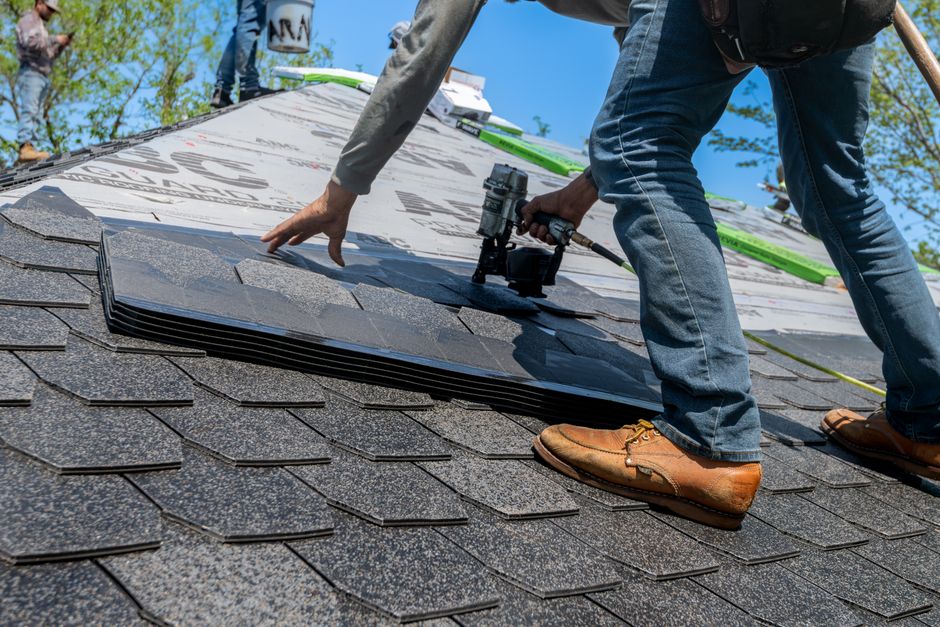
A roof tear-off is the complete removal of existing roofing materials before a new roof system is installed. For homeowners in Brockport, NY, the work usually involves more than stripping off shingles: crews must protect the property, inspect the roof deck, manage debris, and account for changing weather conditions.
Understanding the sequence can make the project easier to follow and can help explain why conditions discovered during removal may affect the work plan.
What happens before the tear-off begins?
Before removal starts, the work area is prepared to protect the house and surrounding property. Roofing materials, tools, and debris containers are positioned so that workers can move safely and discarded materials can be removed efficiently.
Preparation may include:
- Covering siding, windows, doors, landscaping, and nearby surfaces
- Protecting gutters or removing sections that interfere with the work
- Moving patio furniture, grills, planters, and other loose outdoor items
- Marking or protecting electrical lines, exterior fixtures, and vents
- Establishing a ground-level cleanup area
- Reviewing weather conditions and the expected daily work schedule
Roof tear-offs are noisy. Residents may hear scraping, hammering, footsteps overhead, and materials landing in the debris container. Vibrations can also be noticeable inside the home, particularly near the attic or upper floors.
It is often helpful to secure fragile wall decorations and plan for pets or household members who may be sensitive to noise.
How are the old roofing materials removed?
A typical tear-off begins at the uppermost roofing layers and proceeds in sections. Workers remove shingles, underlayment, flashing, and other components that are scheduled for replacement. Specialized hand tools are commonly used to loosen materials without unnecessarily damaging the roof deck.
The amount of material removed depends on the roof’s age and previous repair history. A roof may have:
- One layer of shingles
- Multiple layers installed over time
- Old underlayment or felt
- Damaged flashing around chimneys, walls, vents, or roof edges
- Patches from earlier repairs
- Wood components affected by moisture
The work may look disorderly while it is underway, but removal in controlled sections helps expose the structure safely and gives workers a chance to inspect what lies beneath.
Why is the roof deck inspected after removal?
The roof deck is the structural surface beneath the underlayment and shingles. It is commonly made from plywood or oriented strand board, though older homes may contain different materials.
Once the old covering is removed, the deck can be checked for:
- Soft or weakened areas
- Water staining
- Delamination or swelling
- Split, cracked, or missing sections
- Loose fasteners
- Gaps around penetrations
- Damage near valleys, eaves, or roof edges
A roof can appear reasonably sound from the ground while still having localized deck damage. Moisture may enter around flashing, ice-related areas, failed seals, or long-standing roof penetrations.
Any damaged decking generally needs to be repaired or replaced before new roofing materials are installed. Covering weakened wood may leave the underlying problem in place and can affect how well the new roof system performs.
Can the scope change after the tear-off?
Yes. The original plan is based on visible conditions, but the full condition of the roof deck is often unknown until the old materials are removed.
Additional work may be needed if removal reveals:
- Water-damaged sheathing
- Deteriorated fascia or edge boards
- Missing or damaged flashing
- Improperly installed ventilation components
- Evidence of repeated leaks
- Old roofing layers that were not visible during the initial inspection
This does not always mean the entire roof structure is compromised. Damage is often limited to specific sections. The key point is that tear-off can reveal conditions that could not be confirmed from the surface.
Homeowners should expect clear communication about any newly discovered issue, including its location, why it matters, and what repair is required before installation continues.
How does weather affect a tear-off in Brockport?
Weather is a significant planning factor in this area. Rain, strong wind, freezing temperatures, snow, and sudden temperature changes can interrupt exposed-roof work.
A roof tear-off is normally completed in manageable sections so the exposed structure can be covered if conditions change. Temporary protection is especially important during periods of unsettled weather.
Seasonal conditions can affect the project in several ways:
- Cold temperatures may make some roofing materials less flexible
- Wind can make loose debris and protective coverings harder to control
- Rain can delay work and create risks on exposed decking
- Snow and ice add weight and make roof access more hazardous
- Spring and fall weather may change quickly during the workday
A short delay caused by weather can be preferable to installing materials or leaving the roof exposed under unsafe conditions.
What happens to the old roofing materials?
Removed shingles and related debris are usually collected in a container or designated loading area. Cleanup is an important part of the tear-off because roofing nails and sharp material can fall into grass, soil, driveways, and walkways.
A thorough cleanup commonly includes:
- Sweeping or magnetically collecting loose nails
- Removing shingle fragments and underlayment
- Checking around shrubs, garden edges, and driveways
- Clearing debris from gutters and drainage areas
- Inspecting paths used by household members and vehicles
Even with careful cleanup, homeowners should avoid walking barefoot around the work area until the project is fully complete and the ground has been checked.
Does a roof tear-off damage siding or landscaping?
Properly managed work should minimize damage, but tear-off is a physically active process. Falling debris, ladders, foot traffic, and equipment can place stress on nearby property.
Protective measures may include ground tarps, temporary barriers, padded equipment supports, and careful placement of debris containers. Shrubs and low landscaping may be covered or shielded where practical.
Homeowners can help by moving items away from exterior walls and identifying delicate features before work begins. Outdoor lighting, cameras, satellite equipment, fencing, and decorative structures may require special attention.
How long does a tear-off take?
The removal portion may take part of a day or several days, depending on roof size, steepness, material layers, access, weather, and the condition of the roof deck.
A simple roof with one layer of shingles may be opened and prepared relatively quickly. A larger or more complex roof can require additional time because of multiple slopes, dormers, valleys, chimneys, additions, or limited access for debris removal.
The tear-off is only one stage of the project. Deck repairs, ventilation changes, flashing work, underlayment installation, and final cleanup can all affect the total schedule.
What should residents do during the work?
During an active tear-off, staying clear of the work area is the safest choice. Falling materials may reach areas beyond the roof edge, and nails can be present on the ground even when the project appears orderly.
Useful precautions include:
- Keep children and pets away from the work zone
- Use a garage or alternate entrance if roof access affects walkways
- Avoid parking directly beside debris-handling areas
- Close windows near active work if dust or noise is a concern
- Do not enter the attic while workers are above it
- Report unusual interior leaks or ceiling stains promptly
After removal, the roof may look incomplete, but the exposed structure is being evaluated and prepared for the next stage. The most important parts of a tear-off are controlled removal, careful inspection, reliable weather protection, and thorough cleanup.
